MWAC Janitorial Professionals
You must have regular cleaning based upon potential hazards, operational volume, food allergen presence, and health inspections, plus verification documentation demonstrating HACCP compliance, inspection results, and public health standards. The following sections describe essential sanitation program components.
Main Points
- Brampton sanitation experts assist restaurants, grocery departments, commissaries, warehouses, bakeries, schools, mobile vendors, and allergen-sensitive operations.
- Cross-contamination elimination is achieved by sanitizing high-touch surfaces, food-contact equipment, kitchens, floors, drains, restrooms, and storage areas with compartmentalized approaches.
- Logging of finishing through swabs, reviews, and correction logs confirms certified providers have checked proper chemical concentration, compatibility, and contact time.
- Hazard, production volume, switches, releases, and regulations should guide cleaning schedules, with regular, periodic, and annual duties distributed by zone.
- Contractors must exhibit hazard analysis knowledge, public-health knowledge, safety training education, protection, testimonials, color-categorized tools, and assessment-ready cleaning records.
What Brampton Facilities Require Food Safety Cleaning?
Food safety cleaning is mandatory for any Brampton facility that processes, stores, prepares, packages, or serves food. Apply it to your operation if it comes under public health inspection, food premises regulations, or internal HACCP-based controls. This includes eateries, cafes, warehouses, supermarket areas, meat markets, fish stands, convenience outlets, and institutional food areas.
You'll furthermore need adherent sanitation standards in storage centers, processing facilities, refrigerated warehouses, bakery retailers, school nutrition programs, event halls, and delivery centers. Portable business models apply too, examples being mobile kitchens, market vendors, and seasonal booths. Should your team handle raw materials, divide prepared dishes, warm finished meals, or maintain allergen storage, your venue requires written cleaning standards. In Brampton, sanitation stays mandatory; it represents legal, operational, and consumer protection compliance.
What Do Brampton Cleaning Experts Clean?
Professional cleaning services specializing in Brampton sanitize touched surfaces, food preparation areas, floors, and restrooms to satisfy food safety standards and health requirements. Emphasis on these spaces occurs because they pose maximum contamination danger, potential for accidents, and possible regulatory violations.
Knowing their service areas allows you to confirm your operation's sanitation satisfies operational demands and regulatory compliance.
High-Touch Surface Disinfection
implement a sterilization plan
Maintaining a sequential system, changing cleaning materials, and keeping sanitization equipment according to section ensures that cleaning remains verifiable, defensible, and ready for inspection continuously
Food Prep Areas, Flooring, and Sanitary Facilities
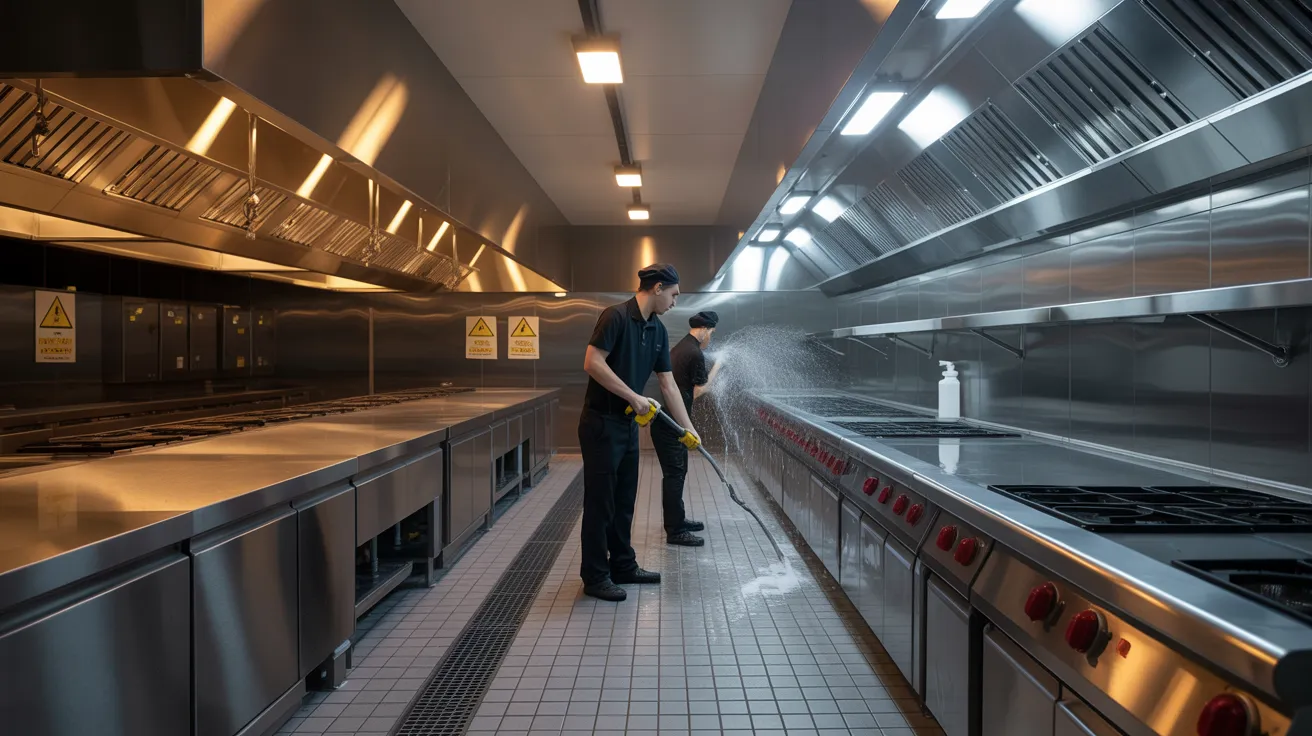
Expect Brampton cleaning experts to focus on kitchens, floors, and restrooms because each area carries unique foodborne illness prevention, accident prevention, and public health risks. In industrial kitchens, you need degreasing on cook lines, equipment exteriors, drains, prep surfaces, and splash zones to minimize contamination and pest pressure.
You should also expect documented flooring maintenance. is likewise provided as part of the service.
Restroom cleaning requires disinfecting touch areas, bathroom equipment, stall barriers, supply stations, and bins, replacing items and managing smells. They also service restaurant moprooms, where chemical storage, sink hygiene, and drainage conditions can affect sanitation compliance and staff safety daily.
Food Safety Cleaning Significance for Brampton Businesses
Brampton businesses need to establish food-safe cleaning standards for meeting health code requirements and obtaining approval. You also minimize bacterial spread through proper cleaning of food-preparation surfaces, appliances, and frequently-touched items. Most importantly, you help protect public health by lowering the risk of foodborne illness in your facility.
Regulatory Code Requirements
Food establishments in Brampton face rigorous sanitary regulations, making food safety cleaning crucial to satisfying health code requirements, safeguarding patrons, and avoiding enforcement action. You must maintain hygienic food handling zones, documented cleaning schedules, safe chemical management, and traceable training practices that comply with municipal and provincial inspection expectations.
Failure to maintain cleaning standards results in citations, corrective orders, public perception damage, and service interruption during further inspections or enforcement reviews.
Cross-Contamination Prevention
Maintaining health code standards copyrights on your capacity to prevent cross-contamination during everyday food preparation and sanitation. You need to partition uncooked items from finished dishes, sanitize prep surfaces between tasks, and position cleaning agents away from food surfaces. Explicit protocols lower contamination threats and support consistent compliance during inspections.
Implementing allergen separation helps ensure major allergens don't touch shared surfaces, containers, or equipment. Deploy dedicated cutting boards, color-coded tools, and clear tool marking so staff don't mix items while preparing or distributing. Require handwashing after handling fresh proteins, aquatic items, egg products, or allergen materials. Replace wiping cloths regularly, and validate disinfectant levels using test strips. When your team learns these guidelines per shift, you create a cleaner, safer operation that meets Brampton's food safety expectations regularly.
Community Health Safety
When sanitation efforts deteriorate, you don't only face inspection setbacks—you expand the chance of foodborne illness affecting customers, staff, and the larger Brampton community. You also undermine your responsibility in protecting public health, especially in high-traffic food premises where pathogens travel quickly through surfaces, equipment, and touchpoints.
You depend on sanitation protocols that remove soils, properly disinfect, and ensure effectiveness. This involves maintaining contact periods, deploying approved disinfectants, recording schedules, and training employees to meet compliance standards. These actions support pathogen control by reducing microbes before contaminating food or hands. In Brampton, effective cleaning shields vulnerable populations, minimizes disease spread, and demonstrates accountability. When you adhere to proper protocols, you go beyond regulations—you meaningfully lower danger and advance safer food handling throughout the city.
In What Ways Does Cleaning Help Achieve Food Safety Compliance?
Maintaining strict sanitation practices ensures food safety compliance by reducing contamination risks, managing pathogen expansion, and keeping your facility in accordance with sanitation requirements under HACCP-based programs and public health regulations. You confirm that food-contact surfaces stay visibly clean and microbiologically controlled, enabling documented preventive controls and inspection readiness.
Diligent cleaning additionally enhances allergen prevention by eliminating residues that can provoke undeclared allergen exposure. When you match verified sanitation methods with standards training, your staff can execute standardized methods, handle approved chemicals accurately, complete records accurately, and handle deviations ahead of they escalate. Ongoing cleaning enables product tracking, verifies corrective actions, and demonstrates responsibility when audited. Moreover, it supports you preserve product safety, maintain regulatory compliance, and lower the possibility of compliance actions, mass recalls, customer complaints, and preventable public health risks.
Finding When to Schedule Commercial Cleaning
everyday routine cleaning
Establish every week or every month cleaning for drains, ventilation systems, storage racks, and hard-to-reach areas, determined by inspection results and sanitation logs. Set aside seasonal deep cleaning to cover shutdowns, weather-related soil buildup, or pest-pressure periods
What Should You Look For in Brampton Cleaning Experts?
Evaluate providers first by sanitation compliance standards rather than cost. You must ensure each provider understands CFIA, public health, and HACCP-aligned expectations for your business. Request insurance proof, WHMIS compliance, staff training documentation, and supervision methods. Check technician awareness of contamination prevention, chemical safety, and documented sanitation practices.
Additionally, you need to evaluate operational reliability and accountability. Obtain references from food facilities in Brampton, then review response times, corrective measures, and communication standards. Verify the company supports supplier audits and can deliver compliance-ready records when inspectors or external parties need proof. Verify equipment upkeep, color-coded equipment are applied correctly, and location-specific dangers are identified. A capable service protects compliance, product integrity, and your brand reputation.
What's covered in a sanitation cleaning strategy?
Write out a framework that outlines every sanitation activity, guideline, and role before production begins. You should include cleaning schedules, approved products, ratios, contact periods, tools, and validation approaches for each area, surface, and device. Ensure you include pre-operational inspections, corrective actions, and employee training requirements.
Your strategy should helpful information also address cross-contamination controls, waste handling, pest-prevention measures, and documented schedules for restrooms, drains, floors, and food-contact areas. Detail how you'll keep raw and ready-to-eat processes separate, facilitate ingredient tracking, and maintain accurate allergen labeling through validated cleaning between product changes. You should set accountability, keep signed records, and review results against regulatory standards, HACCP controls, and customer requirements. When gaps appear, modify procedures immediately and retrain staff.
Commonly Requested Inquiries
Will cleaning services manage nighttime hours at Brampton facilities?
Yes, you can contract sanitation providers to handle overnight shifts in Brampton facilities. You'll manage overnight sanitation around production schedules, security controls, and staffing levels. Services typically outline nightshift logistics to minimize interruption, maintain standards, and log completed work. You should verify response times, management, access procedures, and disposal methods before service starts.
Are hazard containment services available from Brampton cleaning experts?
Yes, you can expect many Brampton sanitation professionals to offer hazard containment services. They manage hazardous materials, evaluate dangers, isolate affected areas, and begin swift cleanup to reduce exposure and operational disruption. You should confirm their response times, training certifications, PPE protocols, and disposal procedures. If your facility must meet health or food safety regulations, choose a provider that records events, maintains regulatory procedures, and supports audit readiness.
Can green disinfectants be utilized safely on food preparation areas?
Definitely, green disinfectants operate safely on food-handling equipment if you buy items marked food-safe that comply with regulatory standards. You ought to validate contact times, dilution ratios, and rinse requirements ahead of deployment. Botanical formulations decrease chemical burden, but you need demonstration of efficacy against target microorganisms. To maintain residue-free conditions, follow exact manufacturer guidelines and ensure your disinfecting agent adheres to food sanitation requirements.
Will cleaning plans adapt to seasonal variations?
Certainly, maintenance plans respond to seasonal shifts successfully. Adapt schedules, staff levels, sanitizers, and testing procedures to fit with operational cycles while sustaining compliance standards. Lower production interruptions through scheduling cleaning during production shifts, maximum output, and equipment use patterns. Concurrently update procedural documents, employee training, and monitoring protocols to reflect temporary risks, novel allergens, or elevated soil levels. Periodic assessments maintain your program efficient.
Do professional cleaning services educate employees on hygiene standards?
Absolutely, professional cleaning companies frequently provide staff training on hygiene standards. Your staff receives training on proper chemical use, contact times, contamination avoidance, machine takedown, and documentation. They typically align instruction with HACCP, GMP, and CFIA or regional health authority requirements. Many conduct sanitation audits to ensure adherence, pinpoint weaknesses, and strengthen corrective measures. This enables you to sustain consistent procedures, pass inspections, and lower contamination dangers routinely.
Closing Remarks
When you partner with Brampton food safety and commercial cleaning specialists, you don't just tidy up—you keep your operation audit-prepared and your standards compliant. From kitchens to processing floors, every polished surface and maintained area minimizes unwelcome guests and avoid expensive problems. By scheduling service at the right intervals and adhering to a detailed cleaning schedule, you safeguard staff, patrons, and your reputation. In a tightly regulated environment, sanitary conditions are essential—they're fundamental to proper operations.